What is ROS?
ROS (Robot Operating System) is an open framework for developing robotic and automation systems. It is not an operating system in the traditional sense, but rather an ecosystem of tools, libraries, and standards that simplify the development of complex robotic systems.
ROS is widely used today in industry, research, and product development, enabling modular, scalable, and future-proof software for robotics and autonomous systems.
ROS 2 is the second generation of ROS, designed for industrial applications with a focus on real-time performance, security, distributed systems, and long-term support.
Course Objectives
The goal of the course is to provide participants with a solid and practically applicable foundation in ROS 2. After completing the course, participants will be able to:
-
Understand how ROS 2 is structured and used in practice
-
Build, structure, and further develop ROS-based systems
-
Know where to find further knowledge, documentation, and community resources for continued advancement

Course Structure
The course is designed to accommodate mixed audiences and different levels of technical background. It begins with a shared introduction aimed at creating a common understanding of ROS 2 across roles, and then gradually shifts focus toward hands-on, software-developer-oriented content.
We offer a 2-day course (2 half-days) in ROS 2, tailored for companies and organizations. An optional third day can be added for deeper technical work and customer-specific customization.
The first part of the course is a high-level, accessible introduction intended for all participants, regardless of technical background. This ensures that project managers, technical leads, decision-makers, and developers share a common mental model of what ROS 2 is and how it is used.
This introductory section covers:
What ROS 2 is and what problems it is designed to solve
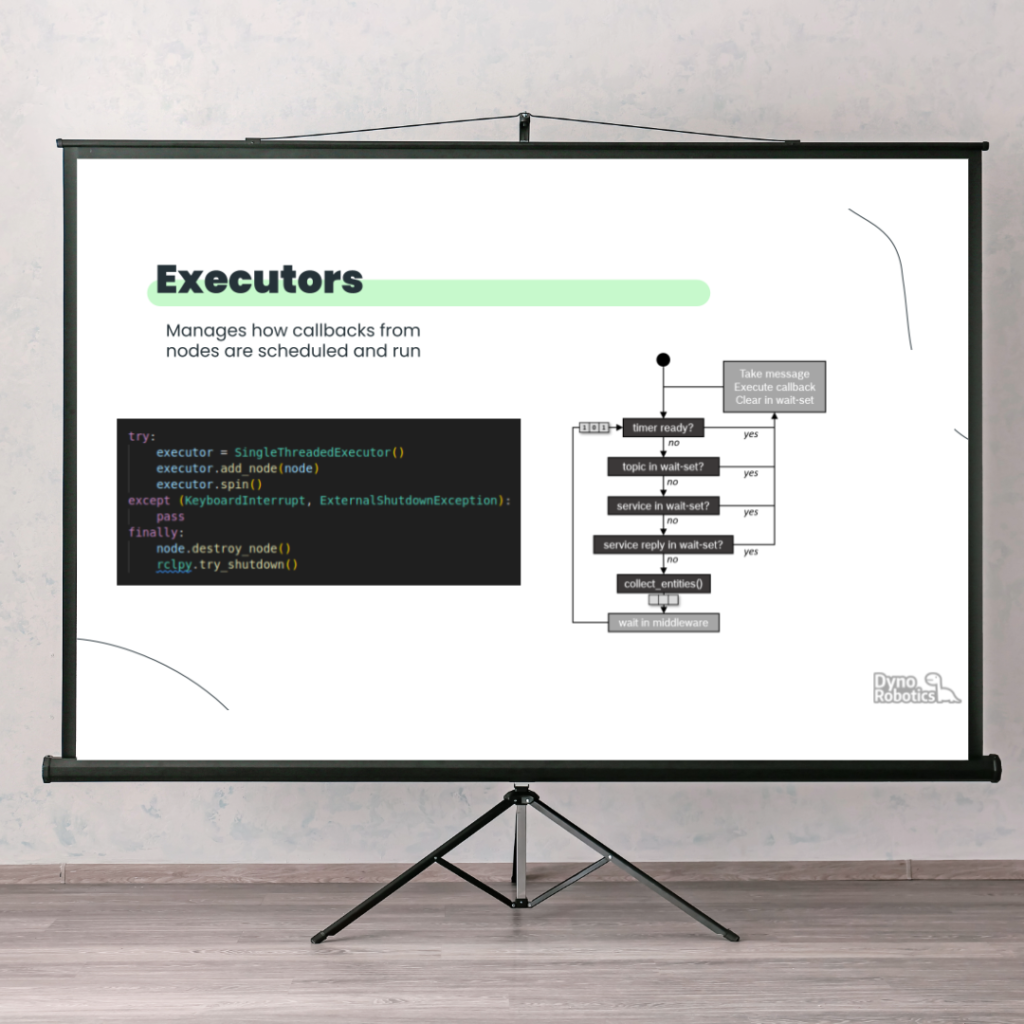
Basics and key concepts of ROS 2
How ROS 2 is used in real-world robotics and automation projects
After this shared introduction, the course transitions into a technical foundation aimed at software developers. This part assumes general programming experience but no prior knowledge of ROS.
Topics include:
Core concepts and architecture of ROS 2
How ROS 2 systems are structured and composed
Developing ROS 2 applications using C++ and/or Python
- Practical workshop with key robot concepts
The second day focuses on software developers and technical roles, with in-depth, hands-on content. We work closely with the developers throughout the day, guiding them through practical exercises, discussions, and real-world examples. The material is adapted to the customer’s technical level, existing systems, and goals, ensuring immediate relevance and applicability.
Typical focus areas include:
Developing and debugging in ROS 2
How to make your robot in ROS 2
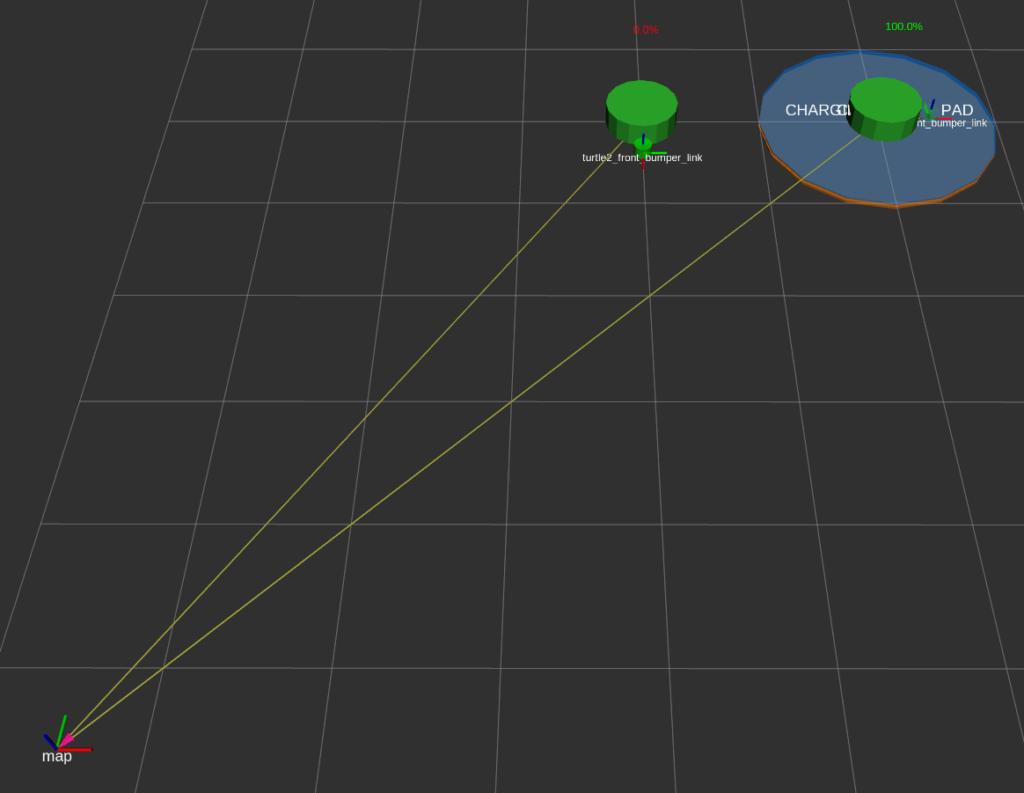
How to simulate your robot
Where to find additional learning resources
For teams that want to go further, an optional third day can be added. This day is fully customized and built around the customer’s specific needs, challenges and technical topics of interests.
Possible focus areas include:
ROS 2 and Hardware
Localization and navigation algorithms
Other simulators like Unity & Isaac-Sim
Docker for ROS 2
ROS networking
Multi-robot simulation
Testing with ROS 2
ROS2 for realtime critical systems
This optional day is especially valuable for teams planning to use ROS 2 in production or already working on active projects.
Prerequisites & Technical Requirements
To get the most out of the technical part of the course, participants need:
Their own laptop with Docker installed
Access to GitHub
Basic programming knowledge in C++ and/or Python
Practical Information
Location: The course is held at the customer’s site
Duration: 2 half-days
Number of participants: Up to 15 people
Price: Provided upon request
Why ROS 2?
ROS 2 is today one of the most important frameworks for modern robot development:
Built largely on open source, enabling fast and cost-effective development
Provides a standardized approach to robot software
Offers a large ecosystem of ready-made tools and an active community
Designed for industrial and long-term applications
Why Take the Course?
With this course, you get:
A fast, accurate, and proven introduction to ROS 2
A shared understanding across teams, where project managers and decision-makers gain insight into the core concepts their developers work with
Developers who can get started efficiently without unnecessary trial and error
Established best practices applied from day one
Practical insight into how ROS 2 is used in real-world projects and production environments
Why Dyno Robotics?
Dyno Robotics combines hands-on experience with strong pedagogy:
With several years of experience in both ROS and ROS 2, we have delivered real-world and commercial robotic systems.
We regularly receive requests to share our knowledge and experience
During the course, we present examples from our own ROS-based projects
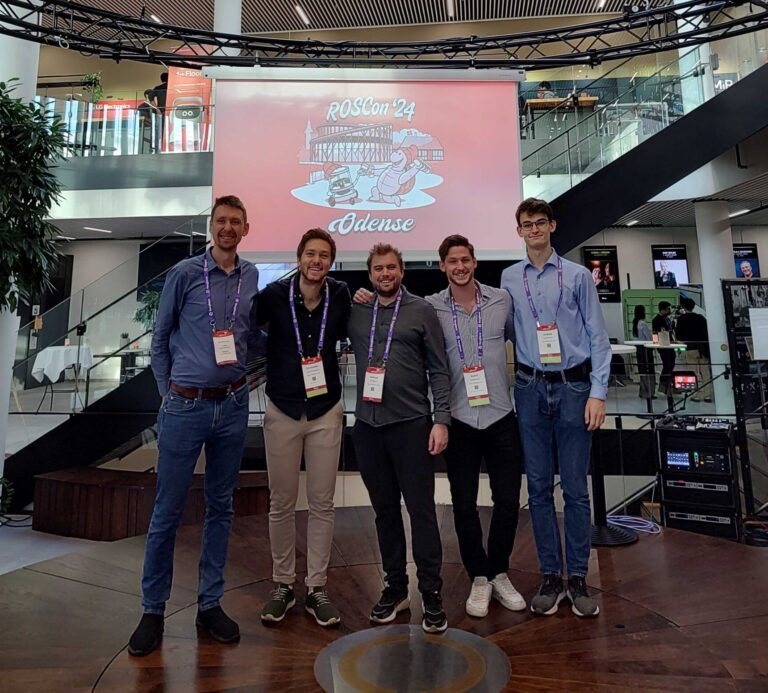
We stay continuously up to date with ROS 2 and its ecosystem and regularly attend international conferences such as ROSCon
We run the course annually for student organizations, giving us both technical breadth and experience in explaining complex systems clearly